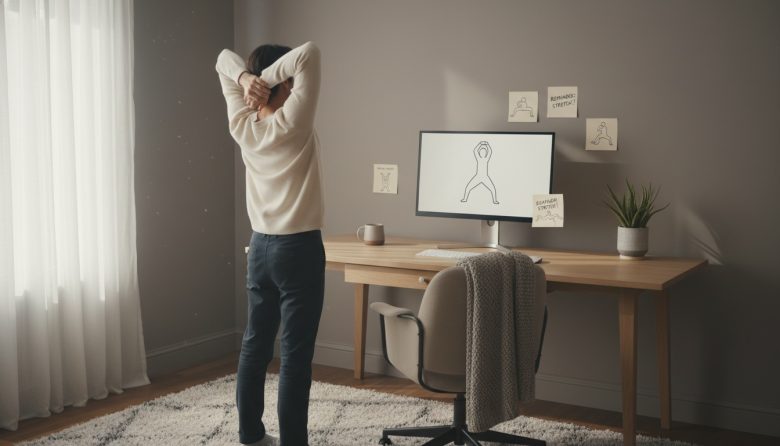
Picture this: It’s 3 p.m., you’re knee-deep in emails, kids’ school pick-up is looming, and your shoulders have crept up to your ears again. That familiar ache settles into your neck and back, zapping your energy just when you need it most. I’ve been there—hunched over my laptop as a dad juggling deadlines and dinner prep, feeling like my body was betraying me after hours at the desk.
Posture isn’t just about looking good in photos. It affects how you breathe, your focus at work, and even those evening walks with the family. Poor habits sneak up during screen time, leading to tension headaches or low mood by bedtime. But here’s the good news: simple desk reminders can rebuild your alignment without fancy gear or gym time.
You’re not alone in this—many of us spend hours glued to screens while life pulls us in every direction. These tiny nudges, like a quick phone ping or sticky note, retrain your body gently. In my own routine, they’ve cut my back twinges in half. Stick around, and I’ll share quick wins that fit your busy days.
If This Sounds Like You
Your shoulders round forward during endless Zoom calls with colleagues.
That nagging back ache flares up after prepping family dinner at the kitchen counter that doubles as your desk.
Afternoon slumps hit hard in your home office, leaving you rubbing your neck mid-task.
It’s okay if work deadlines and kid interruptions pull you into that hunch—we’ve all felt it. Many parents and professionals notice the same patterns. Small, consistent tweaks can ease it without upending your routine.
Why Tiny Desk Nudges Beat Big Overhauls
Let me tell you about Sarah, a teacher and mom I coached. She tried ergonomic chairs and yoga classes, but neck strain persisted amid grading papers at her desk. Then she added phone pings for posture checks—within weeks, her headaches faded, and she had more energy for her kids’ soccer games.
Muscle memory is key here. Your body defaults to slumps under stress, but reminders interrupt that loop, building straight-spine habits. Science backs it: consistent cues strengthen posture muscles over time, boosting oxygen flow and mood. Ever notice how one sticky note changes your whole day?
Big changes overwhelm busy schedules, but nudges like these slip in effortlessly. They pair well with other simple habits, such as how to practice deep breaths during commutes, amplifying your daily reset. No need for perfection—just steady progress.
Try This First: Your 60-Second Posture Reset
Grab your phone right now and set a recurring alarm for every 30 minutes during work hours. Label it “Ears over shoulders.” When it buzzes, pause: roll your shoulders back, align your ears above your shoulders, and tuck your chin slightly.
Here’s the quick demo: Sit tall, imagine a string pulling the top of your head up, then relax your jaw. Do this for 10 seconds—feel the shift? Many folks report instant relief after one day, especially on low-energy afternoons.
It’s perfect for desk-bound parents. Set it during nap times or quiet work slots. Give it a go next time you’re at your desk—you might stand taller by evening without thinking twice.
4 Steps to Build Desk Reminders That Stick
- Spot your slump triggers. Notice when you hunch—email rabbit holes, phone scrolling, or waiting for kid updates? Jot three down in your notes app. This awareness is your foundation; if family calls interrupt, just note it and move on.
- Pick fun cues that spark joy. Choose alarms with upbeat tones, colorful sticky notes saying “Sit tall!”, or a small object like a photo frame nudged forward as a visual prompt. Fun keeps it light—many find silly voices on apps make checking effortless.
- Stack with your routines. Link checks to coffee sips, email sends, or stretching after calls. For example, every time you grab water, reset your posture. This builds on what you already do, fitting seamlessly around work and family chaos.
- Track wins weekly. Sunday evenings, note how many checks you hit and any less pain. Use a simple journal or app. Celebrate small victories—like pairing it with how to track steps with your phone daily for full-body wins.
These steps take under 10 minutes to set up. Adapt if interruptions happen; consistency over perfection wins every time. You’ll notice straighter days unfolding naturally.
Make It Your Own: Reminder Ideas for Real Life
Tailor these to your world for lasting stickiness. Visual lovers: Prop a family photo straight ahead—glance and align. Tech fans: Try free apps with vibration nudges during meetings.
- Family-friendly: Tape kid drawings on your monitor with “Straight like a superhero!” messages.
- Low-energy days: Record a gentle voice note saying “Breathe tall”—play it softly.
- Morning boost: Combine with how to start days with a glass of lemon water for an aligned start.
Mix what fits your busy rhythm. Experiment weekly; many find one tweak energizes their whole routine. You’ve got this—your desk can feel supportive again.
Real Stories: How These Reminders Changed Desk Days
Take Mike, a sales dad: Sticky notes cut his shoulder pain during calls, letting him chase his toddler pain-free evenings.
Or Lisa, juggling remote work and homeschool: Phone alarms aligned her spine, easing headaches and sharpening focus for lessons.
These shifts happen when reminders meet real life. What’s your desk setup like? Simple cues turned their slumps around—yours can too.
Which reminder will you try first? Share in the comments—we’re all building better habits together. Start with one alarm today, and watch the difference unfold.
FAQ
Will reminders really fix my posture long-term?
Yes, with consistency, they rewire habits through repetition. Many see lasting changes in 4-6 weeks as muscles strengthen. It’s gentle and sustainable for everyday life.
What if I forget to check them?
That’s common—start with fewer alarms and fun cues to build momentum. If a day slips, just restart without guilt. Progress compounds over time.
Are there free apps for this?
Plenty, like phone timers or basic posture apps with vibrations. No need for paid ones; your built-in clock works wonders. Experiment to find your favorite.
Can kids use these too during homework?
Absolutely—simple notes or alarms teach them early. It fits family desks, promoting healthy habits together. Kids love the fun twist.
How soon will I feel better?
Some notice relief same-day; fuller ease in a week with daily checks. Listen to your body—gentle persistence pays off quickly.