The 2 a.m. Refrigerator Visit Is Not a Moral Failure
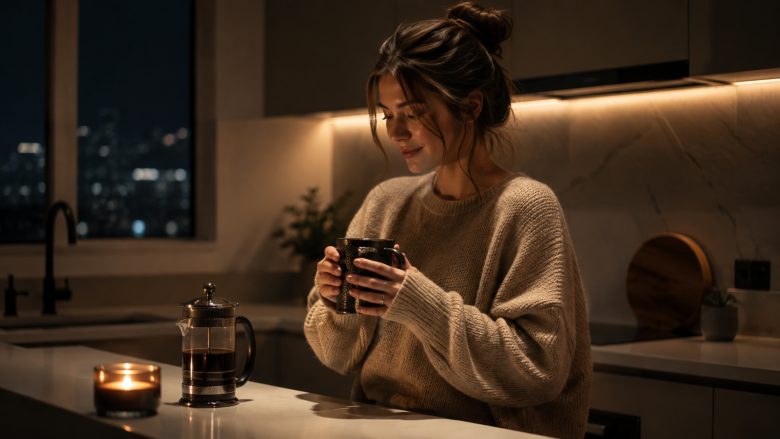
The question "how to avoid late night snacking" usually comes after a familiar scene. You told yourself no. You brushed your teeth. And somehow, at 11:40 p.m., you are standing in the kitchen light, eating shredded cheese straight from the bag, feeling a mix of shame and mechanical satisfaction.
Here is the honest answer: You do not need more willpower. You need to understand what is actually driving you to the fridge. Late-night snacking is rarely a discipline problem. It is a signal. It points to something else - real hunger, a habit loop, an emotional trigger, or a sleep debt.
This guide will walk you through how to read that signal, separate true physical hunger from cravings, and build a practical system that works with your biology instead of against it.
Why You Are Hungry at Night: The Root Causes Nobody Talks About
Most articles tell you to brush your teeth and drink water. Those tips work for about one night. They fail because they treat the symptom while ignoring the three forces that actually drive late-night eating.
Sleep Deprivation Changes Your Hormones
When you are sleep-deprived, your body releases more ghrelin, the hunger hormone, and less leptin, the hormone that tells you that you are full. A 2016 study from the University of Chicago found that even a single night of short sleep increased ghrelin levels and made participants report higher hunger ratings. This is not in your head. It is biology.
If you consistently get under seven hours of sleep, your body is chemically wired to seek calories. The solution is not to fight that hunger with discipline. It is to address the sleep deficit at the source. For a deeper dive on winding down, see our guide on how to gradually cut back on late-night screens, which is one of the highest-leverage sleep fixes you can make.
Emotional Eating Hijacks the Reward System
Nighttime is when your defenses are down. After a long day, your brain craves a dopamine hit. Food, especially food high in sugar and fat, provides that hit quickly. This is not greed. It is a neurological loop.
Most people don't realize that emotional eating is rarely about the food. It is about using food to change how you feel. Boredom, loneliness, anxiety, and resentment all get numbed by a bowl of ice cream. The food works temporarily. Then the guilt arrives, which makes you want more food to soothe the guilt. This cycle is the real enemy.
The Restriction-Rebound Cycle
When I first started coaching people on this issue, I made the mistake of telling everyone to just stop buying snacks. The result? They ate more, not less. Strict rules create psychological deprivation. When you tell yourself "I can never eat at night," your brain treats that as a threat to a basic need.
This sets up a rebound effect. You white-knuckle it for a few days, then you binge harder. The binge triggers shame, shame triggers stricter rules, and the cycle repeats. This is why diets fail and why "just eat less" is useless advice.
Is It Real Hunger or Just a Craving? How to Tell the Difference
Before you can solve the problem, you need to know what you are dealing with. True physical hunger and a craving feel completely different, but most people confuse them.
Here is a quick test you can run the next time you feel the pull toward the pantry:
- Physical hunger builds gradually, can be satisfied by many foods, and goes away when you are full. It comes from the stomach.
- A craving comes on suddenly, demands a specific food (usually salty or sweet), and does not go away even when you are stuffed. It comes from the head.
- Emotional hunger is triggered by a feeling or a situation, not by an empty stomach. It craves comfort, not calories.
If you are genuinely hungry, eating is the correct answer. Ignoring real hunger is not a virtue. It is a setup for a bigger binge later. The goal is not to never eat at night. The goal is to make conscious, guilt-free choices when you do.
The 3-3-3 Rule: A Simple Framework for Cravings
You may have heard of the 3-3-3 rule floating around. It is a simple decision-making tool that helps you pause before you eat. Here is how it works:
- 3 hours: Ask yourself, "Did I eat a satisfying meal within the last 3 hours?" If yes, your hunger is likely a craving or boredom. If no, you are probably actually hungry.
- 3 minutes: Set a timer for 3 minutes. Do something else - drink a glass of water, fold laundry, scroll your phone. Cravings are like waves. They peak and then they pass. Most cravings will fade within 10 minutes if you do not feed them.
- 3 questions: Ask yourself three things: Am I hungry? Am I thirsty? Am I tired? You would be shocked how often the answer is "thirsty" or "tired," not hungry.
The 3-3-3 rule is not a magic bullet. It will not stop a genuine hunger signal. But it gives your rational brain a chance to catch up with your emotional brain. It creates a delay, and delay is the enemy of impulse.
Should You Eat at 2 a.m. If You Are Hungry?
This is the question I get asked most often. The short answer: If you are truly hungry, yes, you should eat. But you need to be honest about what "truly hungry" means.
If you wake up at 2 a.m. with a gnawing stomach and you cannot fall back asleep because of it, ignoring that hunger is counterproductive. Your body needs fuel. However, eating a large, high-fat meal at 2 a.m. will disrupt your sleep and likely give you heartburn.
Here is my rule of thumb: If you eat at 2 a.m., keep it small, under 200 calories, and balanced. Good options include a small apple with a tablespoon of peanut butter, a glass of milk, or a handful of almonds. Avoid anything with heavy sugar or refined carbs, which will spike your blood sugar and wake you up even more.
The thing nobody tells you about late-night eating is that the type of food matters more than the act of eating. A small, protein-rich snack can actually help you sleep by stabilizing your blood sugar overnight. The problem is rarely the snack. It is the bag of chips, the pint of ice cream, or the entire leftover pizza.
Why People with ADHD Are More Prone to Late-Night Eating
If you have ADHD, the standard advice to "just stop snacking" is almost insulting. ADHD brains work differently, and understanding that is the key to solving the problem.
There are three main reasons why ADHD and late-night eating are so closely linked.
Stimulation Seeking
The ADHD brain is chronically under-stimulated in the dopamine department. Food, especially crunchy, salty, or sweet food, is a quick and reliable source of stimulation. At night, when there are fewer external distractions, the brain craves that input even more. This is why you can eat an entire bag of chips without even tasting them. You are not eating for flavor. You are eating for the sensory input.
Delayed Hunger Cues
Many people with ADHD also struggle with interoception, which is the ability to sense your body's internal signals. You might not feel hungry all day, skip meals, and then hit a wall of ravenous hunger at night. This is not a snack craving. This is your body screaming for the calories it missed earlier.
If this sounds like you, the fix is not to restrict at night. The fix is to eat more during the day. Set alarms for meals. Keep snacks at your desk. Do whatever it takes to get fuel in before the evening, so you are not starving at 10 p.m.
Hyperfocus and Time Blindness
People with ADHD often lose track of time. You start working or watching a show, and suddenly three hours have passed without you eating. The result is a massive hunger spike that feels urgent and overwhelming. In that state, you are much more likely to grab whatever is quickest, which is rarely a vegetable.
If you have ADHD, structure is your friend. Do not rely on willpower. Rely on systems. Keep easy, healthy snacks visible. Pre-portion chips into single servings. Set a "last snack" time and put a post-it note on the pantry door.
The Guilt-Restriction Shame Cycle: How to Break It
Here is the part that most articles miss. The late-night eating is not the real problem. The real problem is what happens the next morning.
You wake up, feel guilty, and promise yourself you will do better. You restrict yourself all day to "make up" for it. By night, you are starving and emotionally depleted, so you eat even more. This is the guilt-restriction cycle, and it is the single biggest reason people cannot stop late-night snacking.
The way out is counterintuitive: You need to give yourself permission to eat.
When I first tried this approach with myself, I was terrified. I thought, "If I give myself permission, I will eat everything in the house." The opposite happened. When I stopped labeling certain foods as forbidden, they lost their power. I stopped obsessing about them. I stopped bingeing on them.
This is not pseudoscience. It is backed by research on restrained eating and food intake, which shows that rigid dietary restraint often backfires, leading to overeating and higher body weight. Flexible restraint, where no food is off-limits, is associated with better outcomes.
Try this tonight: If you want a snack, tell yourself, "I can have this. I am choosing to have it. I will enjoy it without guilt." Then actually enjoy it. Eat it slowly, without the TV on. You will likely find that one serving is enough. The guilt is what makes you eat the whole bag.
A Practical 4-Step Protocol for Tonight
Forget the grand plans. Here is a step-by-step process you can implement in the next hour. This is what works in the real world, not in a textbook.
Step 1: Eat a Bigger, More Satisfying Dinner
If you are snacking at 10 p.m., there is a good chance you are eating a too-small dinner at 6 p.m. A dinner that is mostly vegetables and lean protein is not enough. You need fat and complex carbs to feel full.
Add a serving of healthy fat, like avocado, olive oil, or cheese, to your dinner. Add a fist-sized portion of potatoes, rice, or whole grains. These foods slow digestion and keep you full for hours. This is not permission to overeat. It is permission to eat enough.
Step 2: Run the 3-3-3 Check
When the craving hits, do not suppress it. Run the 3-3-3 rule from earlier. How long since your dinner? Are you actually hungry? What are you feeling?
Most of the time, you will realize that you are not hungry. You are bored or tired. If that is the case, go to Step 3.
Step 3: Create a "Craving Menu"
Write down a list of 10 things you can do instead of eating. Not vague things like "do a hobby." Specific things. "Text my friend Sarah." "Do 10 pushups." "Take a hot shower." "Read two pages of my book."
Keep this list on your phone or on the fridge. When a craving hits, pick one item and do it for 10 minutes. If you still want the food after 10 minutes, have it. No guilt. This is not about deprivation. It is about creating space between impulse and action.
Step 4: If You Eat, Eat Smart
If you decide to eat, do it consciously. Do not eat from the bag or the carton. Put a small portion on a plate or in a bowl. Turn off the TV. Sit down. Eat slowly and taste it.
This is the "permission to eat" approach in action. When you eat with full attention, you get more satisfaction from less food. You are much less likely to go back for seconds because you actually registered what you ate.
When Late-Night Snacking Is a Sign of Something Bigger
Sometimes, late-night eating is not a habit or a craving. It is a clinical condition called Night Eating Syndrome (NES).
NES is characterized by a delayed circadian pattern of food intake. People with NES consume a significant portion of their daily calories after dinner, wake up to eat during the night, and often experience insomnia. It is not just a preference for late-night snacks. It is a disorder that causes significant distress.
If you find yourself eating most of your calories at night, waking up to eat, or feeling a complete loss of control around food, it is worth speaking to a doctor or a registered dietitian. NES is treatable, but it requires professional help, not just willpower. The same goes for binge eating disorder, which involves eating large amounts of food in a short period while feeling a loss of control.
This is not to pathologize every late-night snack. But if the advice in this article feels impossible to follow, or if your eating causes you deep shame and distress, seek help. There is no shame in asking for support.
Your Sleep Schedule Is Your Best Defense
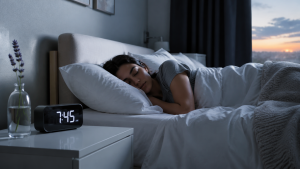
I will end with the most underrated tool in your arsenal: sleep. If you are not sleeping enough, every other tip in this article becomes twice as hard.
Sleep deprivation increases ghrelin, the hunger hormone. It impairs your prefrontal cortex, the part of the brain responsible for impulse control. It makes you crave high-calorie foods more intensely. In short, a tired brain is a hungry brain.
If you are serious about stopping late-night snacking, focus on your sleep schedule first. Go to bed earlier. Get at least 7 hours. Make your bedroom cool, dark, and quiet. And if you are still scrolling on your phone at midnight, start there. The blue light and the endless content feed keep your brain alert and your habits intact.
As we covered earlier, cutting back on screens is one of the highest-leverage changes you can make. Pair that with a consistent wind-down routine, and you will find that the urge to snack at night diminishes naturally. You are not fighting hunger anymore. You are just sleeping through it.
Reclaiming Your Evenings Without the Food
Late-night snacking is a stubborn problem because it rarely has a single cause. It is a tangle of biology, emotion, and habit. That is why the usual advice fails. It is too surface-level.
Start by treating your snacking as data. What is it telling you? Are you under-slept? Are you under-fed during the day? Are you using food to cope with boredom or stress? Answer those questions honestly, and the behavior will start to shift.
Give yourself permission to eat when you are genuinely hungry. Build a buffer zone between a craving and an action. And above all, drop the guilt. The guilt is not helping you. It is the fuel for the cycle you are trying to break. You are not broken. You are just responding to signals. Now you know how to read them.