Most advice on adding protein to meals is just a list of foods: eat chicken, Greek yogurt, eggs, and nuts. That works, but it leaves you guessing about quantities, combos, and timing. I spent years in this exact loop - eating a boiled egg with toast for breakfast, a sad salad with grilled chicken for lunch, and still landing at 60 grams of protein by dinner. Then I started using a framework I call the Protein Stacking Method. It is not a single food or a shake. It is a three-pillar system that helps you hit 30 grams per meal and 100 grams per day without expensive supplements or boring repetition.
Here is the core idea: you stack dense proteins (eggs, tofu, cottage cheese, chicken) with complementary ones (grains, beans, seeds) and time them strategically across the day. When I finally applied this, my energy stabilized, my recovery after workouts improved, and I stopped spending money on protein powders. In this guide, I will show you exactly how to do it - with a personal protein calculator, a 7-day budget meal prep plan, and the hidden protein tricks that most people overlook.
The Protein Stacking Method: A 3-Pillar Framework
The method has three pillars: Density, Pairing, and Timing. Each one answers a specific question about how to get more protein into your meals.
Pillar 1: Density
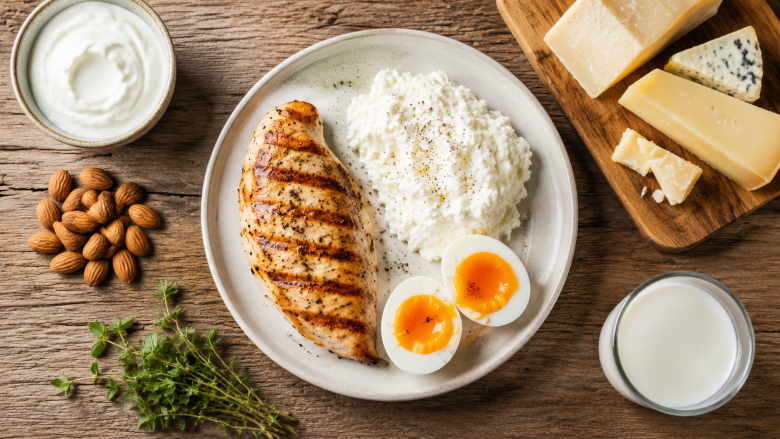
Density means choosing foods that deliver the most protein per calorie and per dollar. A dense protein source gives you at least 20 grams of protein per 100 grams of food. Chicken breast, Greek yogurt, cottage cheese, firm tofu, and canned tuna all hit that mark. Eggs are moderately dense (about 13 grams per 100 grams), but they are cheap and versatile, so they still earn a place.
The mistake I made early on was treating all protein sources equally. I would add a handful of almonds to my salad and think I was covered. Almonds have only 6 grams of protein per 30-gram serving, and they are calorie-heavy. That is not density. When you start tracking grams per 100 calories, you see why Greek yogurt outperforms nuts every time.
Pillar 2: Pairing
Pairing is about combining incomplete protein sources to create a complete amino acid profile, and also about combining dense proteins with bulk to make meals satisfying. For plant-based eaters, this means rice and beans, hummus and pita, or peanut butter on whole-grain toast. For omnivores, pairing means adding a dense protein to a carbohydrate-rich base - like putting a fried egg on top of oatmeal (trust me, it works) or mixing cottage cheese into pasta sauce.
Most people don't realize that you do not need to eat complementary proteins at the same meal. Your body pools amino acids over the course of the day. So rice at lunch and beans at dinner are perfectly fine. But when you pair them in one dish, you get a psychological win because you see the protein count on your plate.
Pillar 3: Timing
Timing is about spreading your protein intake across the day to maximize muscle synthesis and appetite control. The research is clear that you do not need to slam 50 grams immediately after a workout, but you do need a consistent baseline. Aim for 25 to 35 grams at each of your three main meals, plus one or two snacks of 10 to 15 grams. This is the sweet spot for most active adults.
I used to skip breakfast or eat a muffin, then try to catch up at dinner. That is a recipe for cravings and overeating. When I shifted to a protein-forward breakfast - usually eggs plus Greek yogurt or cottage cheese - my afternoon snack cravings vanished.
First, Do You Actually Need More Protein? (5 Signs You Might Be Short)
Before you start stacking, it is worth checking whether you are actually deficient. These are the five signs I see most often in clients and in myself when I let protein slide.
- Constant cravings for sugar and carbs. Protein is the most satiating macronutrient. If you are hungry an hour after eating, your meals are probably protein-light.
- Slow recovery after workouts. If your muscles feel sore for three days after a normal gym session, you are not giving them the building blocks they need. I noticed this directly when I dropped my protein intake during a busy work month.
- Hair and nail changes. Protein is the structural component of keratin. If your hair is shedding more than usual or your nails are brittle, that is a red flag.
- Brain fog and low focus. Amino acids are precursors to neurotransmitters like dopamine and serotonin. A low-protein diet can leave you feeling mentally sluggish.
- Frequent late-night snacking. If you are raiding the pantry after dinner, you likely did not hit your protein target during the day. I used to do this every night before I started timing my meals properly.
If you recognize more than one of these, it is time to run the numbers. But even if you do not have symptoms, you might still benefit from a structured approach to protein, especially if you are active or over 50.
How Much Protein Do You Really Need? Your Personal Protein Calculator
The standard recommendation for a sedentary adult is 0.8 grams per kilogram of body weight, but that is a bare minimum to avoid deficiency. For most people who want to build muscle, lose fat, or simply stay strong as they age, the practical range is 1.2 to 2.2 grams per kilogram. The exact number depends on your activity level and goals.
Here is a simple formula I use with my clients:
Step 1: Take your weight in pounds and divide by 2.2 to get kilograms. Step 2: Multiply by 1.6 if you are moderately active (3 to 5 workouts per week), or by 1.8 to 2.0 if you are very active (heavy training or physical job). Step 3: The result is your daily protein target in grams.
For example, a 160-pound moderately active person: 160 / 2.2 = 72.7 kg. 72.7 x 1.6 = 116 grams per day. That rounds to about 115 grams. Now you have a number to aim for.
If you want a more precise tool, you can use our cottage protein calculator to see how much protein you get from a specific food. And for those who track grains, the wheat protein calculator is handy when you are calculating complete meals.
Once you know your daily number, divide it by 3 to get a per-meal target. If you need 120 grams a day, that is 40 grams per meal. If you need 90 grams, it is 30 grams per meal. This is where the stacking method becomes practical.
How to Get 30g of Protein in Every Meal (Stacking in Practice)
Thirty grams might sound like a lot, but with the stacking method it is easy. You need a dense base, a complementary pair, and a timing strategy. Here are three meal templates that consistently hit 30 grams without protein shakes.
Breakfast: The Egg Stack
Three large eggs (18g protein) plus 1/2 cup of Greek yogurt (12g protein) equals 30 grams. Scramble the eggs and serve them with a side of yogurt and berries. Or make an omelet with 2 eggs and add 1/4 cup of shredded cheese (7g) and a slice of whole-grain toast (4g) - that also lands around 30g.
When I first tried this, I thought Greek yogurt at breakfast was weird. Then I switched to a savory version: a dollop of yogurt on top of scrambled eggs with hot sauce. It is creamy, tangy, and completely satisfying.
Lunch: The Bowl Stack
A grain bowl is the most forgiving meal for stacking. Start with 3/4 cup of cooked quinoa (6g protein) or brown rice (5g). Add 4 ounces of grilled chicken (35g) or 1/2 cup of tofu (10g) plus 1/2 cup of black beans (8g). Top with 2 tablespoons of sunflower seeds (3g) and a sprinkle of nutritional yeast (2g). You are already past 30 grams.
The key is to choose a dense protein as the star, then use the grains and seeds to bump the number up. Do not rely on the grains alone - they are too low in protein per volume.
Dinner: The Sauce Stack
This is where hidden protein comes in. Blend 1/2 cup of cottage cheese into your marinara sauce. It adds 12 grams of protein and makes the sauce creamy without changing the flavor. Serve over 4 ounces of ground turkey (20g) and a cup of whole-wheat pasta (8g). That is 40 grams right there.
I learned this trick from a meal-prep friend who was tired of dry chicken. She started blending cottage cheese into everything - soups, stews, even mashed potatoes. It is the easiest way to add protein without tasting it.
If you want to see the exact protein content of different cottage cheese portions, check our cottage protein calculator - it saved me from guessing when I was building my meal plan.
How to Get 100g of Protein a Day Without Protein Shakes
One hundred grams sounds intimidating, but it is just three meals at 30 grams plus one snack at 10 grams. Here is a full day using the stacking method that I actually ate during a busy week.
- Breakfast: 3-egg omelet with 1/4 cup shredded cheese and a slice of whole-grain toast (30g) - plus black coffee.
- Lunch: Chicken salad bowl with 4 oz grilled chicken, 1/2 cup quinoa, mixed greens, and 2 tbsp pumpkin seeds (35g).
- Snack: 1/2 cup Greek yogurt with a drizzle of honey (12g).
- Dinner: Baked salmon (4 oz, 23g) with 1 cup roasted chickpeas (12g) and a side of broccoli. (35g)
Total: 112 grams. No shakes, no bars, just real food. The timing matters: I eat the yogurt snack at 3pm, right when I usually crave something sweet. That snack keeps me from raiding the pantry at 8pm.
The thing nobody tells you about hitting 100 grams is that you need to plan ahead. If you wing it, you will end up at 60 grams. Spend 20 minutes on Sunday portioning out chicken, eggs, and yogurt containers, and the rest of the week takes care of itself.
Budget-Friendly Meal Prep: 7-Day Protein Stacking Plan
Protein is often seen as expensive, but with the right choices, you can hit 100 grams on a tight budget. My go-to cost-effective sources are eggs, canned tuna, cottage cheese, Greek yogurt (when on sale), chicken thighs (cheaper than breasts), and frozen edamame. Here is a 7-day plan that costs about $60 for one person.
Day 1: Breakfast: 3 eggs + toast + yogurt. Lunch: Tuna salad with whole-wheat crackers. Dinner: Chicken thigh with rice and broccoli.
Day 2: Breakfast: Greek yogurt + granola. Lunch: Cottage cheese + fruit + almonds. Dinner: Beef stir-fry with tofu and vegetables.
Day 3: Breakfast: Egg and cheese breakfast burrito. Lunch: Chickpea and quinoa salad. Dinner: Baked cod with roasted potatoes.
Day 4: Breakfast: Peanut butter on whole-grain toast + milk. Lunch: Leftover stir-fry. Dinner: Turkey meatballs with marinara and pasta.
Day 5: Breakfast: Cottage cheese with pineapple. Lunch: Chicken and avocado wrap. Dinner: Salmon with sweet potato and green beans.
Day 6: Breakfast: Omelet with spinach and feta. Lunch: Lentil soup with Greek yogurt. Dinner: Pork chop with apples and quinoa.
Day 7: Breakfast: Smoothie made with Greek yogurt and milk (no powder). Lunch: Tuna-stuffed avocado. Dinner: Chicken fajitas with black beans.
For each meal, write down the protein grams. You will see that most days hit 100 without even trying. The key is to buy in bulk: a dozen eggs is $3, a tub of cottage cheese is $4, and a bag of frozen chicken thighs is $7. Use our waffle protein calculator if you are swapping in waffles for breakfast - it helps you keep track.
Complete Plant-Based Protein Combinations (For Vegetarians and Vegans)
If you are plant-based, the stacking method becomes even more important because most plant proteins are incomplete. But you do not need to eat rice and beans at the same meal - your body combines amino acids throughout the day. Still, pairing them in one dish makes it easier to hit your target.
The classic combination is rice and beans. One cup of cooked brown rice has 5 grams of protein, and 1/2 cup of black beans has 8 grams. That is 13 grams, which is not enough on its own. But add 1/4 cup of pumpkin seeds (8g) and 2 tablespoons of nutritional yeast (4g), and you get 25 grams. Top it with a dollop of hummus (2g) and you are at 27 grams.
Other complete or complementary pairs include hummus and whole-wheat pita, peanut butter on whole-grain bread, and quinoa (which is a complete protein) with lentils. Tofu and tempeh are also complete proteins, so they are your best friends. A 4-ounce block of firm tofu has 12 grams of protein, and tempeh has 16 grams per 4 ounces.
My biggest mistake as a new vegetarian was relying on beans alone. I would eat a big bowl of lentil soup and feel full, but I was only getting 15 grams. Now I always add a seed or a grain to push the number up. The most effective plant-based breakfast is oatmeal: 1/2 cup of oats (6g) plus 1 cup of soy milk (7g) plus 2 tablespoons of peanut butter (8g) equals 21 grams. Add a sprinkle of chia seeds (2g) and you are at 23 grams. It is not 30, but it is close, and you can add a side of tofu scramble if you need more.
Hidden Protein: Collagen, Cottage Cheese Blends, and Other Sneaky Additions
Hidden protein is the secret weapon of the stacking method. These are ingredients that add protein without changing the taste or texture of your dish, and they are perfect for picky eaters or people who are tired of chicken.
Collagen powder in your coffee or smoothie is a classic move. It dissolves completely and adds about 9 grams per scoop. Collagen is not a complete protein because it lacks tryptophan, but it is still a great way to bump your numbers. I use it on days when I am traveling and cannot control my meals.
Blended cottage cheese is the most underrated trick. Puree a cup of cottage cheese in a blender until smooth, then add it to pasta sauce, soup, or even scrambled eggs. It adds 24 grams of protein per cup and makes everything creamier. I have used it in mac and cheese, alfredo sauce, and even banana bread. Nobody ever notices.
Nutritional yeast has 4 grams of protein per tablespoon and a cheesy flavor. Sprinkle it on popcorn, salads, or roasted vegetables. Hemp seeds have 10 grams per 3-tablespoon serving and blend into smoothies or yogurt. Egg white powder is another option, but it is more expensive.
Most people don't realize that even ketchup can have protein if you choose the right brand. But if you are counting, you can use our ketchup protein calculator to see how much you are actually getting. It is not a main source, but every gram counts when you are aiming for 100.
Common Mistakes and Trade-offs (What I Learned the Hard Way)
When I first started stacking protein, I made three mistakes that cost me time and money. The first was over-relying on protein bars. They are convenient, but they are expensive and often loaded with sugar. I now reserve them for emergencies only.
The second mistake was ignoring the calories. Protein is not calorie-free. Adding an extra 30 grams of protein often means adding 150 to 200 calories. If you are trying to lose weight, you need to adjust your portion sizes elsewhere. I had to cut back on carbs to stay in my calorie range.
The third mistake was not adjusting for age. As you get older, your body becomes less efficient at using protein. Older adults may need 1.6 to 2.0 grams per kilogram to maintain muscle. If you are over 50, do not stick to the 0.8 baseline - it is too low. I learned this when my father, who is 72, started losing strength. We added more protein to his diet and he noticed a difference in his energy within two weeks.
One trade-off is that protein-rich diets can be hard on the kidneys if you have pre-existing kidney disease. That is a rare edge case, but if you have any kidney issues, talk to your doctor before increasing protein significantly. For healthy people, high protein intake is safe and even beneficial for bone health.
Final Thoughts: The Protein Stacking Method in Action
The Protein Stacking Method is not a rigid diet - it is a flexible framework that you can adapt to any food preference, budget, or schedule. Start by calculating your daily target, then divide it across three meals and one snack. Choose dense proteins as your base, pair them with complementary foods, and time them to keep you full and energized.
You do not need protein shakes, expensive supplements, or exotic ingredients. You need eggs, dairy, beans, grains, and a little planning. When I first applied this method, I went from 70 grams a day to 120 grams in less than a week. The difference in my energy and my gym performance was noticeable within a month.
If you are ready to start, pick one meal tomorrow and stack it. Make a breakfast with 3 eggs and a side of Greek yogurt. Or blend cottage cheese into your dinner sauce. Small changes compound. Before you know it, you will be hitting 100 grams without thinking about it.
And if you want to track your exact numbers, use our tools - the vodka protein calculator is a fun one, but for real meals, the cottage protein calculator and wheat protein calculator are the ones I rely on. They make the math simple, so you can focus on eating.
Now go stack your plate.