Every parent knows the 4 p.m. drill. The bus pulls up, the backpack hits the floor, and suddenly your kid is "starving" - even though they ate lunch 90 minutes ago. The pantry door swings open, and whatever is fastest wins.
Healthy snacks for kids don't need to be complicated, expensive, or Pinterest-worthy. What they need is a simple decision rule, age-appropriate options, and a strategy for the picky eater who rejects anything green on sight. That's what this guide covers.
The core principle: aim for snacks that combine protein, fiber, and minimal added sugar. That combination keeps blood sugar steady, fills small stomachs, and sustains energy between meals. Below is the framework I use with my own kids, organized by age and skill level so you can hand off more responsibility as they grow. If you need to dial in portion sizes, our Snack Calorie Calculator is a handy tool for that.
The 5-Second Snack Test: A Decision Rule That Works
The single most useful habit I've developed as a parent is a three-question test that takes about five seconds. It works for packaged snacks, fresh foods, and everything in between.
When you pick up any snack, ask three questions:
- Does it have at least 5 grams of protein?
- Does it have at least 3 grams of fiber?
- Does it have less than 8 grams of added sugar?
If it hits two out of three, it's a reasonable everyday snack. If it only hits one, save it for a special occasion. If it hits zero, it's candy with better marketing.
When I first started using this test, I was shocked to discover that the granola bars I'd been buying for years - the ones with the smiling cartoon characters and the word "whole grain" on the box - had more sugar than a candy bar. The fiber was there. But 12 grams of added sugar? That's the equivalent of three Oreo cookies.
Most people don't realize that the "kids snacks" aisle at the grocery store is engineered to look healthy. Bright packaging, cartoon mascots, and buzzwords like "organic" and "natural" do a lot of heavy lifting. The 5-second test cuts through all of that.
Here's what the test looks like in practice:
- Greek yogurt cup: 12g protein, 0g fiber, 4g added sugar. Pass (2 out of 3).
- Fruit leather: 0g protein, 1g fiber, 12g sugar. Fail.
- Apple with peanut butter: 4g protein, 5g fiber, 0g added sugar. Pass.
- Cheese stick: 6g protein, 0g fiber, 0g added sugar. Mixed - pair it with fruit.
- "Veggie" chips: 1g protein, 1g fiber, 2g sugar. Fail. The word "veggie" on the bag doesn't make it a vegetable.
The test isn't perfect. A cheese stick is a fine snack even though it has no fiber - you just pair it with an apple. The test is a starting point, not a rigid rule.
Snack Ideas by Age and Skill Level
The right snack for a 2-year-old is very different from the right snack for a 10-year-old. Different choking risks, different portion needs, and different levels of independence. Here's how I think about it.
Toddlers (Ages 1-3): Texture, Choking Risks, and Tiny Portions
Toddlers have two big constraints: choking safety and tiny stomachs. The American Academy of Pediatrics recommends avoiding whole grapes, hard candies, popcorn, and raw carrot rounds for children under 4. Cut grapes lengthwise into quarters. Grate carrots. Skip the popcorn entirely.
Portion sizes matter too. A toddler's stomach is about the size of their fist. A snack should be roughly a quarter of an adult portion: about 1/4 cup of fruit, 1-2 tablespoons of nut butter, or half a slice of toast.
Texture exploration is real. Toddlers will go through phases where they reject foods they loved last week. This is developmentally normal, not a parenting failure.
Snack ideas that work for toddlers:
- Thin apple slices with a smear of peanut butter or sunflower seed butter
- Plain Greek yogurt sweetened with mashed banana (skip the flavored yogurts)
- Hard-boiled egg halves - some toddlers love the yolk, some only want the white
- Avocado cubes with a squeeze of lime
- Oatmeal energy balls: oats, peanut butter, mashed banana, rolled into balls and chilled
- Steamed carrot sticks (soft enough to squish between fingers)
- Cottage cheese with finely diced peaches
One thing I learned the hard way: let the toddler feed themselves. When I tried to spoon-feed my daughter yogurt after she turned one, she clamped her mouth shut. The moment I handed her the spoon, she ate the whole cup. It was messier, but it worked.
Preschoolers (Ages 4-5): Building Independence
Preschoolers want to do things themselves. Lean into that. Snacks that involve assembly are perfect because they build confidence and motor skills at the same time.
Great options for this age:
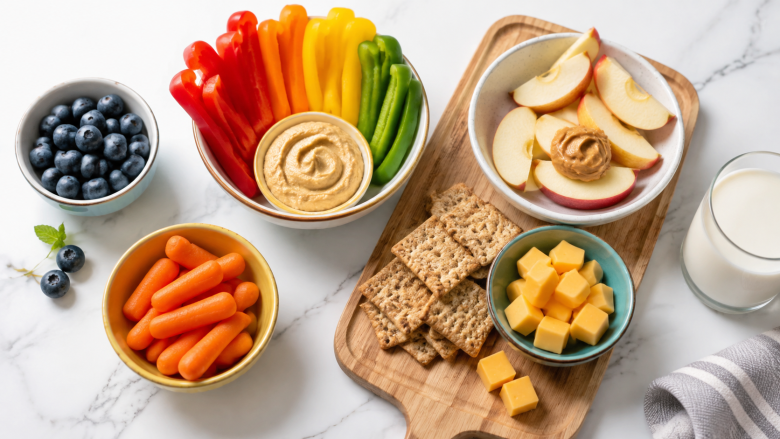
- Build your own snack plates: a protein (cheese cubes, turkey roll-ups), a carb (crackers, pita triangles), and a fruit or veggie. Let them arrange their own plate.
- Ants on a log: celery sticks filled with peanut butter and topped with raisins. They can spread the peanut butter (with supervision) and place the raisins.
- Yogurt parfait cups: layer plain yogurt, granola, and berries in a small cup. Preschoolers love the layering part.
- Quesadilla wedges: whole-wheat tortilla, black beans, and shredded cheese, toasted and cut into triangles.
- Fruit and cheese skewers: use short, blunt sticks with supervision.
The key for this age is that the snack should be ready quickly. A preschooler's patience for waiting is about 30 seconds. Pre-cut everything the night before if you can.
School-Age Kids (Ages 6-9): Lunchbox and After-School
School-age kids need snacks that survive a lunchbox and refuel after a full day of class. They also start comparing lunches with friends, which means peer pressure enters the picture.
Snack ideas that travel well:
- Hummus cups with baby carrots and pita chips
- String cheese with a small handful of almonds (if the school allows nuts)
- Turkey and cheese roll-ups: slice of turkey, slice of cheese, rolled and secured with a toothpick
- Banana with a thin layer of peanut butter, wrapped in a tortilla and sliced into rounds
- Trail mix: make your own with cereal, dried fruit, pretzels, and mini chocolate chips
- Mini bagels with cream cheese and cucumber slices
After school, the priority is refueling. Kids often come home hungry and cranky. A snack with protein and a little carbohydrate is ideal - something like a cheese quesadilla, Greek yogurt with fruit, or a smoothie made with milk, banana, and a scoop of peanut butter.
Here's a trick: prep after-school snacks in the morning. Ten minutes of effort before school saves you from the 4 p.m. pantry scramble. Our guide on how to organize your fridge for healthy grabs has specific strategies for making this easier.
Tweens (Ages 10-12): Autonomy and Social Pressures
Tweens are making more of their own food choices. They're influenced by friends, social media, and what they see in the lunchroom. This is the age where you shift from "here's your snack" to "here's how to choose a snack."
At this age, they can handle more independence:
- Let them pick one "fun" snack item at the grocery store each week
- Teach them to use the 5-second test themselves
- Give them a designated shelf in the fridge and pantry for their snacks
- Show them how to make simple things: microwave popcorn (plain, not buttered), smoothies, egg muffins
Tween-friendly snack ideas:
- Rice cakes with avocado and everything bagel seasoning
- Hard-boiled eggs with a sprinkle of salt and pepper
- Edamame, steamed and lightly salted
- Apple slices with almond butter
- Greek yogurt with honey and granola
- Roasted chickpeas (crispy, savory, and full of fiber)
A note on body image: this is the age when kids start comparing their bodies to peers and media images. Keep snack conversations neutral. Don't label foods as "good" or "bad." Instead, talk about how food gives them energy for sports, school, and activities.
Winning Over Picky Eaters Without the Battle
If your kid lives on buttered noodles and chicken nuggets, you are not alone. Picky eating is developmentally normal, especially between ages 2 and 6. But there are strategies that actually work.
The exposure ladder is the most effective approach I've found. It goes like this:
- Week 1: Just put the new food on the table. Don't ask them to eat it. Just let them see it.
- Week 2: Ask them to touch it. That's it. No eating required.
- Week 3: Ask them to smell it.
- Week 4: Ask them to lick it.
- Week 5: Ask them to take one small bite.
- Week 6: Ask them to take two bites.
This sounds slow, and it is. But research on food neophobia - the fear of new foods - shows that repeated exposure is the most reliable way to expand a child's palate. It typically takes 10 to 15 exposures before a child accepts a new food.
The thing nobody tells you about picky eating: pressure makes it worse. When you say "just try one bite" in a frustrated tone, you reinforce the idea that the food is a punishment. Instead, keep the new food neutral. No rewards, no bribes, no guilt.
Pair new foods with safe foods. If your kid loves cheese, put a slice of apple next to the cheese. Don't make a big deal about the apple. Over time, the apple becomes associated with the cheese.
Also consider: texture preferences are real. Some kids genuinely can't handle mushy textures (bananas, cooked vegetables) but will eat the same foods raw and crunchy. Others are the opposite. Work with their texture preferences rather than against them.
Allergy-Friendly Swaps That Don't Feel Like Sacrifice
Food allergies affect roughly 1 in 13 children in the United States, according to the CDC. If your child has allergies - or if you're packing snacks for a classroom that includes kids with allergies - you need options that don't feel like punishment.
Nut-free swaps:
- Sunflower seed butter (SunButter) is the closest texture and taste to peanut butter
- Pumpkin seed butter is another option, slightly sweeter
- Tahini (sesame paste) works in hummus and dips
- Roasted chickpeas instead of peanuts for a crunchy snack
Gluten-free swaps:
- Rice cakes instead of crackers
- Corn tortillas instead of wheat tortillas
- Oat-based granola (check for certified gluten-free oats)
- Veggie sticks with hummus instead of pretzels
Dairy-free swaps:
- Coconut-based yogurt (check for added sugar)
- Nut-based cheeses (cashew cheese spreads work well on crackers)
- Avocado as a creamy element instead of cheese
- Oat milk or soy milk in smoothies
The key insight: focus on what your child CAN eat, not what they can't. A kid with a nut allergy doesn't need a "special" snack - they need a snack that happens to be nut-free. Sunflower seed butter on apple slices is delicious, not a compromise.
Also, if you're sending snacks to school, always check the classroom allergy policy first. Many schools are nut-free zones, and some are moving toward being allergy-aware for other common allergens too.
Budget-Friendly Snacking Without a Costco Card
Healthy snacks don't have to cost a fortune. The most expensive snacks are often the most convenient - single-serving packages, pre-cut fruit, and prepackaged cheese and crackers. You can cut costs dramatically with a few simple habits.
Buy whole and portion yourself. A large tub of Greek yogurt costs about half as much per serving as single-serve cups. The same goes for cheese, crackers, and hummus. Buy the big container and portion it into small reusable containers on Sunday.
Go frozen for fruit. Frozen berries, mango chunks, and peaches cost less than fresh and are equally nutritious. They're perfect for smoothies, yogurt parfaits, or just thawed as a snack.
Buy seasonal produce. A pint of strawberries in June costs half as much as in December. Plan snacks around what's in season.
The "snack shelf" strategy: dedicate one shelf in your pantry and one in your fridge to snacks. Stock them with the same rotating list of core items, and let your kids choose from what's available. This prevents impulse buying and reduces waste.
A budget-friendly staple list:
- Bananas (always cheap, always filling)
- Apples (buy in bulk bags)
- Carrots and celery (a dollar a bunch)
- Greek yogurt in large tubs
- Peanut butter or sunflower seed butter
- Oats (for energy balls and overnight oats)
- Eggs (cheap protein)
- Canned beans (chickpeas for roasting, black beans for quesadillas)
- Frozen fruit (berries, mango, peaches)
One of the most cost-effective snacks I make is roasted chickpeas. A can of chickpeas costs about $1, and roasting them with olive oil and spices makes a big bowl of crunchy, protein-rich snacks that last for days.
Getting Kids in the Kitchen: Building Skills Early
The best way to build healthy snacking habits is to involve kids in making the snacks. Not only does this teach valuable skills, but kids are far more likely to eat food they helped prepare. This is a well-observed phenomenon sometimes called the "I made this" effect.
Age-appropriate kitchen tasks:
- Toddlers (1-3): washing fruits and vegetables in a bowl of water, tearing lettuce, placing items on a baking sheet
- Preschoolers (4-5): spreading peanut butter with a butter knife (supervised), scooping yogurt into cups, rinsing berries, arranging food on a plate
- School-age (6-9): measuring and pouring ingredients, mixing batters, cutting soft foods with a plastic or kid-safe knife, reading recipes with help
- Tweens (10-12): using the microwave independently, using the toaster oven or oven with supervision, following a simple recipe, packing their own lunch
The thing nobody tells you about cooking with kids: it takes longer and makes more mess than doing it yourself. That's fine. The point isn't efficiency, it's building habits. Set aside 10 to 15 extra minutes and let them take the lead.
Start with one recipe that's simple and forgiving. Energy balls are a great first recipe because they don't require any cooking, the ingredients are forgiving, and kids can roll them into balls with their hands.
A Simple Weekly Snack Plan Template
You don't need to plan every snack for the week. But having a loose template saves you from the daily "what should I give them?" decision fatigue.
Here's what works for me:
- Monday: Fruit plus protein (apple slices with peanut butter)
- Tuesday: Crunchy plus dip (carrot sticks with hummus)
- Wednesday: Dairy plus fruit (Greek yogurt with berries)
- Thursday: Whole grain plus protein (mini bagel with cream cheese)
- Friday: Finger food mix (cheese cubes, crackers, grapes)
- Weekend: Something fun (smoothie bowls, homemade trail mix, fruit skewers)
This isn't a rigid plan. It's a framework. If Monday's fruit and protein turns into Tuesday's crunchy and dip, that's fine. The goal is variety, not perfection.
If you want to get more precise about portions, our Snack Calorie Calculator can help you figure out the right serving size for your child's age and activity level.
Common Snack Mistakes Even Good Parents Make
Let me close with the mistakes I see parents make - including the ones I made myself.
Mistake 1: Snacking too close to meals. If a snack happens within an hour of a meal, it's going to spoil the appetite. Aim for a 2 to 3 hour gap between snack and meal.
Mistake 2: Using snacks as rewards. "If you clean your room, you can have a cookie." This teaches kids that treats are emotionally loaded. Instead, keep snacks neutral and available.
Mistake 3: Letting juice masquerade as a snack. Juice is sugar water, even the "no added sugar" kinds. A glass of orange juice has about 21 grams of sugar and almost no fiber. A whole orange has 12 grams of sugar and 3 grams of fiber. Eat the orange.
Mistake 4: Giving up after one rejection. If your kid rejects a new food once, it's tempting to cross it off the list forever. But research shows it takes 10 to 15 exposures. Keep offering, keep it neutral, and don't pressure.
Mistake 5: Overthinking it. At the end of the day, a snack is just a small meal. It doesn't need to be perfect. An apple with peanut butter is great. A cheese stick with crackers is fine. Even a bowl of cereal with milk is better than nothing. Don't let perfectionism get in the way of good enough.
The best snack for your kid is the one they'll actually eat that also gives them some protein, some fiber, and not a pile of sugar. Everything else is details.