What Is the Easiest High-Protein Breakfast?
The easiest high-protein breakfast is one that gets you 25-30 grams of protein with zero cooking, zero pans, and less than five minutes of active effort. Think Greek yogurt, cottage cheese, or a quality protein shake paired with shelf-stable add-ins. You assemble it, you eat it, you walk away with one spoon to rinse.
Most articles list 30 recipes and call it a day. That misses the point. "Easy" means different things to different people. For a parent with a toddler hanging off their leg, easy means no knife work and no hot surfaces. For someone who hates washing dishes, easy means one container. For a person who cannot stomach cold food at 6 AM, easy means a microwave is involved.
So I have ranked these ideas by time-to-table and dish count, not just by protein content. This is the framework I use with clients who are not morning people, who have never meal-prepped in their lives, and who need something that works on a Tuesday when the coffee is barely brewed.
If you want to fine-tune your protein targets based on what is actually in your fridge, a quick reference like our cottage cheese protein calculator can save you from guessing.
How to Choose Your Time Budget
Before you look at any recipe, decide which constraint actually matters to you. I break breakfasts into three speed tiers. This is the decision tree I use, and it has saved me from many 7 AM panic sessions.
- Under 3 minutes, zero cooking: You are not even fully awake. You need something you can assemble with your eyes half closed. This tier is for the truly desperate.
- 5 minutes, one bowl or pan: You have a little bandwidth. You can toast something, whisk an egg, or microwave a mug. Cleanup is minimal but not zero.
- 10 minutes, batch-friendly: You are willing to do a small amount of prep, but you want it to pay off for several days. This tier is for Sunday evening planning.
The mistake I see most often is people trying to force a 10-minute recipe into a 3-minute morning. They get frustrated, skip breakfast, and then binge on a sad vending machine pastry at 10 AM. Know your tier before you shop.
If You Have 3 Minutes and No Microwave
This is the absolute floor of effort. You need a protein source that requires no heating, no draining, and no measuring beyond a spoon.
My go-to is a single-serving Greek yogurt cup (the 15-20 gram ones) with a scoop of collagen or a handful of nuts. Stir, eat, done. The total time is under two minutes, and the only dish is the spoon. Most people do not realize that the extra protein in these cups comes from milk solids, so the texture is thicker than standard yogurt. If you want it thinner, stir in a splash of milk or water.
Another no-cook option that never fails: cottage cheese with everything bagel seasoning. A full-fat cup of cottage cheese has around 24 grams of protein. Sprinkle it with seasoning, eat it straight from the container with a fork. The fat keeps you full for a surprisingly long time, which is something I did not appreciate until I started paying attention to satiety, not just macros.
When I first started eating cottage cheese for breakfast, I made the mistake of buying non-fat. It was watery and bland, and I gave up on it for months. The full-fat version is a completely different food. It has more calories, yes, but it also has more fat, which is what slows digestion and keeps you from rummaging through the office snack drawer by 10:30.
If You Have 5 Minutes and a Microwave
The microwave is the most underrated tool in the protein breakfast arsenal. It turns eggs and oatmeal into a hot, satisfying meal without any real cooking skill.
The microwave egg scramble is my standard answer for people who want hot food but hate scrubbing pans. Crack two eggs into a microwave-safe mug, add a splash of milk, a pinch of salt, and a handful of shredded cheese. Whisk with a fork, microwave for 45 seconds, stir, then microwave for another 30 seconds. The result is a fluffy, steaming pile of eggs with zero pan to wash. The mug is non-stick enough that a quick rinse handles it.
Here is the thing nobody tells you about microwave eggs: they can explode if you do not stir them halfway. The protein matrix traps steam, and if it builds up too fast, you get a mess. So that 45-second first interval is non-negotiable. You are stirring to release steam, not just to mix.
For a sweet option, microwave protein oatmeal works well if you use the right ratio. Mix 1/2 cup rolled oats, 1 cup water, and one scoop of vanilla or chocolate protein powder. Microwave for 90 seconds, stir like your life depends on it, then microwave for another 30 seconds. The powder can clump if you do not stir it thoroughly, so I whisk the powder into the water before adding the oats. That single step eliminates the chalky lumps that ruin most protein oatmeal.
One warning: plant-based protein powders behave differently in the microwave. Whey and casein thicken nicely, but pea or soy protein can turn into a rubbery paste. If you are using a vegan powder, reduce the amount to half a scoop and add more liquid. This is the kind of detail that only comes from burning through a few batches of sad, gummy oatmeal.
If You Have 10 Minutes and a Stovetop
Ten minutes is enough for a real hot breakfast, but you need to be efficient. The key is to start the slowest thing first, usually the eggs or the toast, and build everything else around it.
The two-egg omelet with a side of Greek yogurt is a classic for a reason. Two large eggs give you about 12 grams of protein. Add 1/2 cup of Greek yogurt on the side, and you are at 22 grams. Throw in some cheese or ham, and you cross the 30-gram line without breaking a sweat. The omelet itself takes about 5 minutes of active cooking. The yogurt is just a scoop into a bowl.
I do not bother with a fancy omelet fold. I scramble the eggs in the pan, push them into a rough patty shape, and flip it once. It is not pretty, but it tastes the same and takes half the time. The people who insist on a perfect French omelet are not optimizing for a weekday morning.
Another 10-minute option is the breakfast burrito, but I only recommend this if you are making several at once. Wrap two scrambled eggs, a slice of cheese, and a handful of leftover roasted potatoes in a tortilla. Cook it in a dry skillet for two minutes per side to crisp the shell. If you make four or five on a Sunday, you have a grab-and-go breakfast for the week that reheats beautifully in a toaster oven.
The No-Cook Protein Sources That Actually Work
You do not need a stove to hit your protein target. You need a shortlist of reliable ingredients that require zero prep. These are the building blocks of every no-cook breakfast I have ever recommended.
- Greek yogurt: Aim for a brand with 15-20 grams of protein per serving. The strained kind is thicker and higher in protein than regular yogurt.
- Cottage cheese: Around 24 grams per cup. Full-fat tastes better and keeps you fuller, but the low-fat version works in a pinch.
- Protein powder: A scoop of whey or casein gives you 20-25 grams instantly. Mix it into yogurt, oatmeal, or a shake.
- Hard-boiled eggs: Boil a batch on Sunday. Each egg is 6 grams of protein, and they keep for a week in the fridge.
- Deli turkey or ham: Roll it up with cheese for a savory, salty bite. Just watch the sodium if that is a concern for you.
The protein shake deserves special mention because it is the ultimate no-cook, no-dish breakfast if you use a shaker bottle. One scoop of powder, 12 ounces of milk or water, shake for 30 seconds, done. The protein content ranges from 20 to 30 grams depending on the powder. The downside is that liquid breakfasts do not satisfy everyone. If you are someone who needs to chew, this will not work for you, and that is fine.
I have a rule: if a breakfast requires more than one bowl or one pan, it is not "easy" for a weekday. The exception is if you are meal-prepping, which I will cover in the next section.
The 5-Minute, One-Bowl Framework
After years of testing, I have settled on a simple framework that guarantees a high-protein breakfast in under five minutes with exactly one bowl to wash. I call it the Base + Boost + Flavor method.
Base: This is your main protein source. Greek yogurt, cottage cheese, or a protein shake.
Boost: This is your secondary protein source that also adds texture. Nuts, seeds, a scoop of protein powder, or a sliced hard-boiled egg.
Flavor: This is what makes it taste good enough to eat daily. Honey, cinnamon, berries, peanut butter, or savory options like everything seasoning or hot sauce.
Here are three combinations that work with zero cooking:
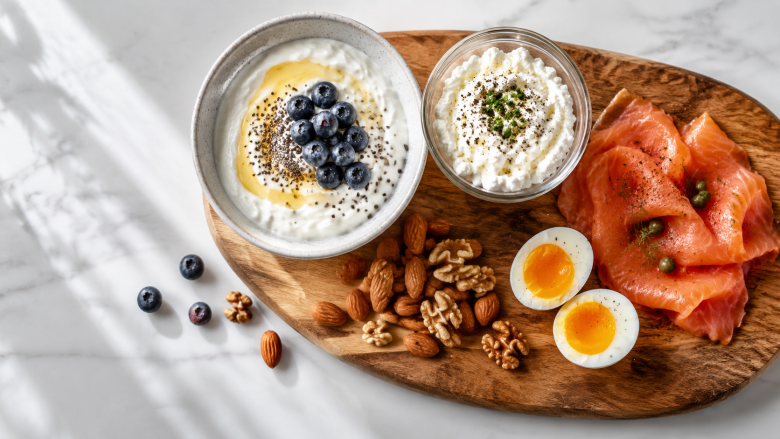
- Sweet and crunchy: 1 cup Greek yogurt + 1 scoop vanilla protein powder + 2 tablespoons chopped walnuts + 1/2 cup berries. Stir, eat, done.
- Savory and salty: 1 cup cottage cheese + 1 sliced hard-boiled egg + everything bagel seasoning + a drizzle of olive oil.
- Peanut butter cup: 1 cup Greek yogurt + 1 tablespoon peanut butter + 1 scoop chocolate protein powder + a sprinkle of cinnamon.
The key to this framework is that you are not following a recipe. You are assembling ingredients that you already know work together. This is faster than any recipe because there is nothing to measure precisely.
Most people do not realize that you can mix protein powder directly into Greek yogurt without a blender. It takes about 30 seconds of vigorous stirring. The texture gets thick and almost like a frosting, which is a pleasant surprise the first time you try it.
Meal Prep Without the Sunday Stress
Meal prep sounds like a great idea until you are staring at a dozen containers on a Sunday night, exhausted, wondering why you signed up for this. The secret is to prep components instead of full meals. This gives you flexibility without the monotony.
Spend 20 minutes on Sunday doing the following:
- Boil 6-8 eggs. They keep for a week in the shell, and they are instant protein for any morning.
- Mix a batch of protein oats. Combine 2 cups rolled oats, 2 scoops protein powder, and a pinch of salt in a jar. In the morning, just add water and microwave.
- Portion out Greek yogurt into small containers. Add a scoop of protein powder on top of each one, but do not stir it in. Stirring happens at breakfast time so the texture stays fresh.
- Wash and chop fruit. Berries, melon, or apples are fine for 3-4 days. Cut them once and you have a grab-and-go topping for yogurt or cottage cheese.
My biggest meal prep mistake was making five identical breakfasts on Sunday and expecting to eat them all. By Wednesday, I was sick of them and ordering a bagel. Now I prep components and mix and match. Monday is yogurt with berries, Tuesday is cottage cheese with an egg, Wednesday is protein oats. The variety keeps it interesting, and the prep time is the same.
If you are tracking macros, a tool like our waffle protein calculator can help you figure out how much protein is in your favorite prepared foods so you know what to prep around.
What Actually Happens When You Skip Breakfast
I am not here to lecture you about breakfast being the most important meal of the day. It is not. But I will tell you what I have observed with my own clients and in my own kitchen.
When you skip breakfast, you are not doomed. You just need to be intentional about your first meal of the day. If you skip breakfast and then eat a normal lunch, you are probably fine. If you skip breakfast and then eat a giant, low-protein lunch because you are starving, you are setting yourself up for an afternoon energy crash.
The research on protein timing is mixed, but most experts agree that spreading protein evenly across meals is better for muscle synthesis than eating most of it at dinner. That does not mean you must eat eggs at dawn. It means if you are aiming for 100-120 grams of protein a day, getting 25-30 grams at your first meal makes the rest of the day easier.
I have had mornings where the thought of food made me nauseous. The solution was not to force down a full breakfast. It was to have a small protein shake, maybe 15 grams, and then eat a proper lunch. That is a perfectly valid approach. Do not let anyone tell you that you must eat a massive breakfast or you will wither away.
Common Mistakes That Sabotage High-Protein Breakfasts
Even with the best intentions, people mess up high-protein breakfasts in predictable ways. Here are the ones I see most often, along with the fix.
Buying "High-Protein" Processed Foods Without Checking the Label
The grocery store is full of protein bars, protein cereals, and protein pancakes that look like a healthy choice. Many of them are just candy with a protein sticker. A bar with 10 grams of protein and 25 grams of sugar is not a health food. It is a dessert.
Check the ingredient list. If sugar or corn syrup appears in the first three ingredients, put it back. Look for products where the protein source is a whole food or a clean protein isolate, not a bunch of random additives.
Ignoring Fiber
A breakfast of pure protein, like a shake or a plate of eggs, can leave you feeling heavy and constipated. You need fiber to keep things moving. That is why my favorite high-protein breakfasts always include a fruit, a vegetable, or a whole grain.
Add a handful of berries to yogurt, throw some spinach into your egg scramble, or use whole-grain bread for your avocado toast. The fiber will make the meal more satisfying and keep your digestion regular.
Overcomplicating the Recipe
I read a "5-minute" breakfast recipe once that required toasting homemade granola, whipping coconut cream, and making a berry compote. That is not a 5-minute breakfast. That is a 45-minute project masquerading as a quick meal.
If a recipe has more than five ingredients or requires more than one cooking step, it is not easy. Save it for a weekend brunch. On a weekday, stick to the one-bowl framework.
Not Accounting for Your Own Appetite
Some people are fine with 20 grams of protein and a cup of coffee. Others need 40 grams or they are hungry by 9 AM. There is no universal number that works for everyone. Pay attention to your own hunger signals.
If you find yourself starving two hours after breakfast, add more protein or more fat. If you are not hungry until lunch, you are probably fine. The goal is to feel satisfied, not to hit an arbitrary number that a fitness influencer posted on Instagram.
Putting It All Together: Your Week at a Glance
Here is what a realistic week of easy high-protein breakfasts looks like using the frameworks I have laid out. This assumes you did a tiny bit of prep on Sunday, like boiling eggs and portioning yogurt.
- Monday: Greek yogurt with protein powder and berries. No cooking, one bowl.
- Tuesday: Microwave egg scramble in a mug with cheese and hot sauce. One mug, one fork.
- Wednesday: Cottage cheese with a sliced hard-boiled egg and everything seasoning. No cooking, one bowl.
- Thursday: Protein oatmeal in the microwave with a scoop of vanilla powder and a handful of walnuts. One bowl, one spoon.
- Friday: A protein shake with a banana blended in, if you have a blender. If not, just shake it in a bottle.
- Saturday: A proper stovetop breakfast. Two eggs, a slice of whole-grain toast, and a side of Greek yogurt.
- Sunday: Leftovers or a repeat of your favorite from the week.
This plan never requires more than 10 minutes of active effort, and most days are closer to 3-5 minutes. The dish count is always one or two items.
When I first started consulting, I tried to be a hero. I made elaborate breakfast casseroles on Sunday and swore I would eat them all week. By Tuesday, I was eating a protein bar in my car because I could not face another slice of that dried-out egg bake. The system I have shared with you is the result of years of trial and error. It is not glamorous, but it works.
If you want to explore a specific ingredient's protein content before committing to a new breakfast routine, our protein calculator tools can help you compare options, though I would recommend starting with the cottage cheese and waffle calculators for breakfast staples.
The easiest high-protein breakfast is the one you will actually eat. If that means a shake on Monday and a mug of eggs on Tuesday, so be it. The best routine is the one you can sustain without resentment.